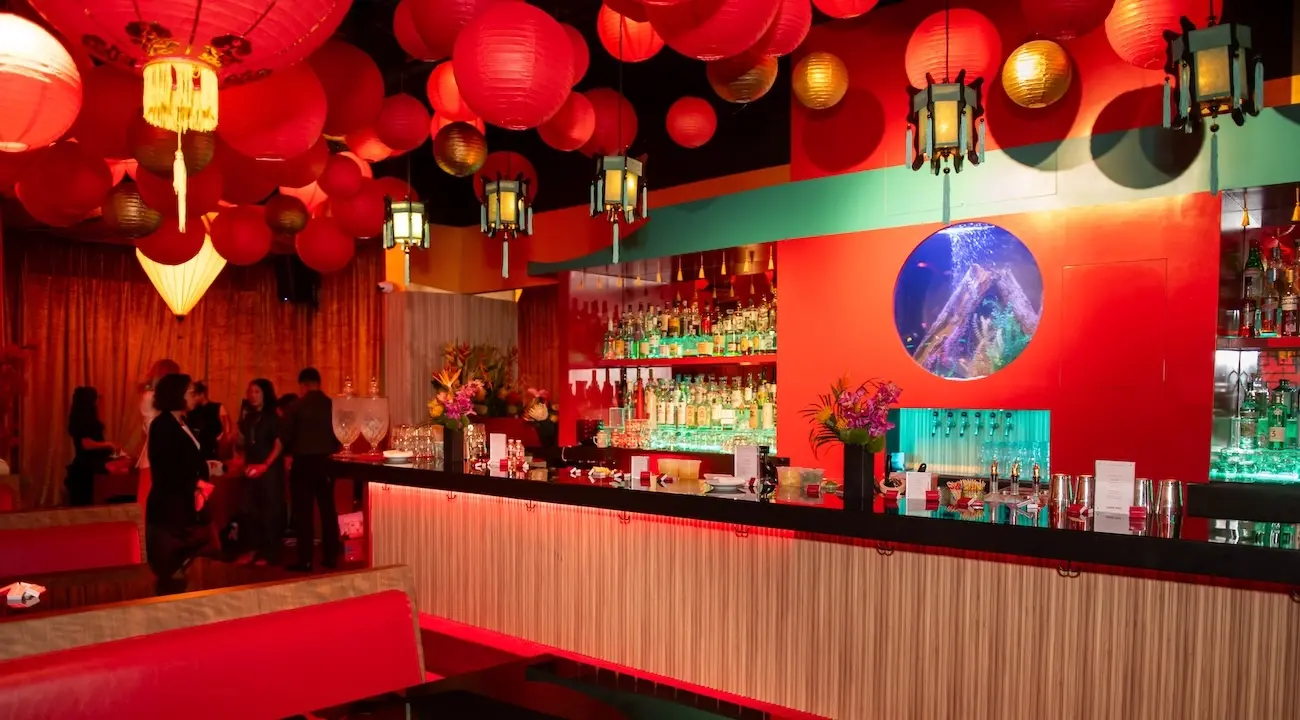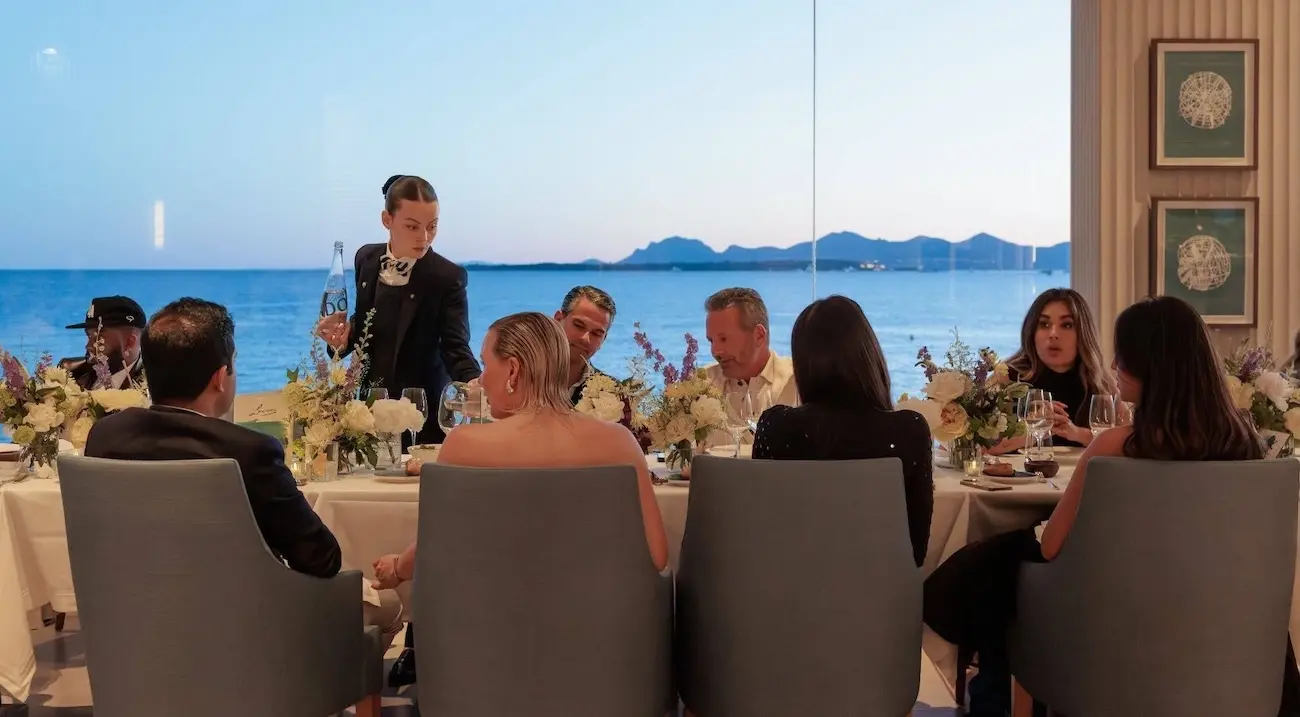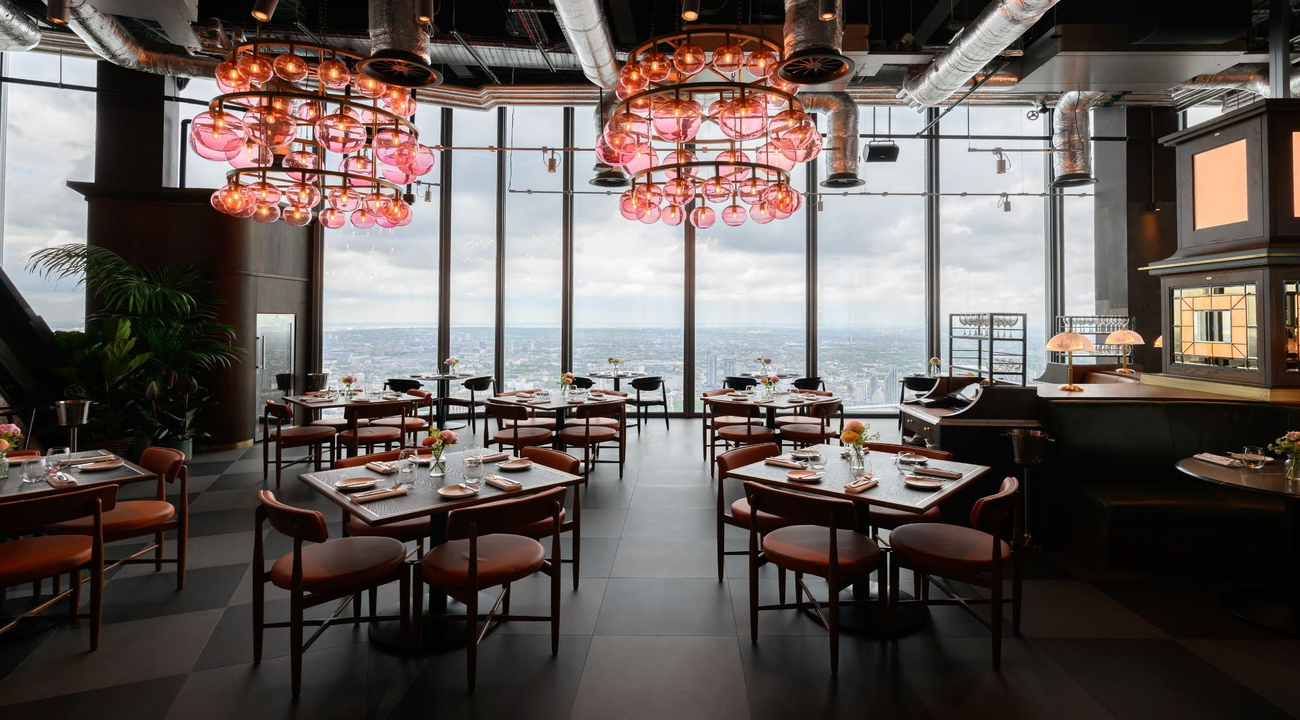
The right seating makes a statement.
The traditional venue layout of evenly spaced round tables has long been the standard event setup. But for event planning teams looking to dazzle guests and create fresh experiences, this tried and true format lacks originality.
Guests want event experiences that feel new, exciting, and luxe, and event planners are helping to deliver those moments with interesting table layouts that command attention.
Ready for some stunning table ideas that will make a statement at your next gala, fundraiser, or elite event?
Here are eight table layout ideas to add visual interest, delight guests, and elevate the entire guest experience.
Layouts for visual impact
Some table arrangements are specifically designed to make a visual statement. If you’re looking to create dramatic aerial views, overhead photo opportunities, or more memorable arrival experiences, these visually driven layouts deliver.

Concentric seating uses rings of round tables arranged around a central focal point, with VIP and host tables in the innermost circle and additional guest tiers radiating outward. This creates a dramatic overhead view and a natural hierarchy of seating.
1. Concentric seating
Concentric seating layouts make for impressive aerial views and arrival experiences, especially if the venue’s floorplan includes a mezzanine, balcony, or overlook where guests can view the space below.
The concentric seating layout features rows of circular tables arranged in rings around a central focal point, particularly suited to round venue spaces like the Roundhouse in London or Cipriani Wall Street in NYC. Tables can be in a uniform size and shape, or you can mix up shapes and sizes to create different rings. This distinctive layout is ideal for large galas, but it does require you to be more mindful when designing seating plans.
When creating seating charts, be consistent with who sits in each ring. For example, VIPs and hosts should be in the small, innermost circle. Sponsors and donors should be in the adjacent ring, and so on.
Related: How to plan an event seating arrangement that makes every guest feel comfortable
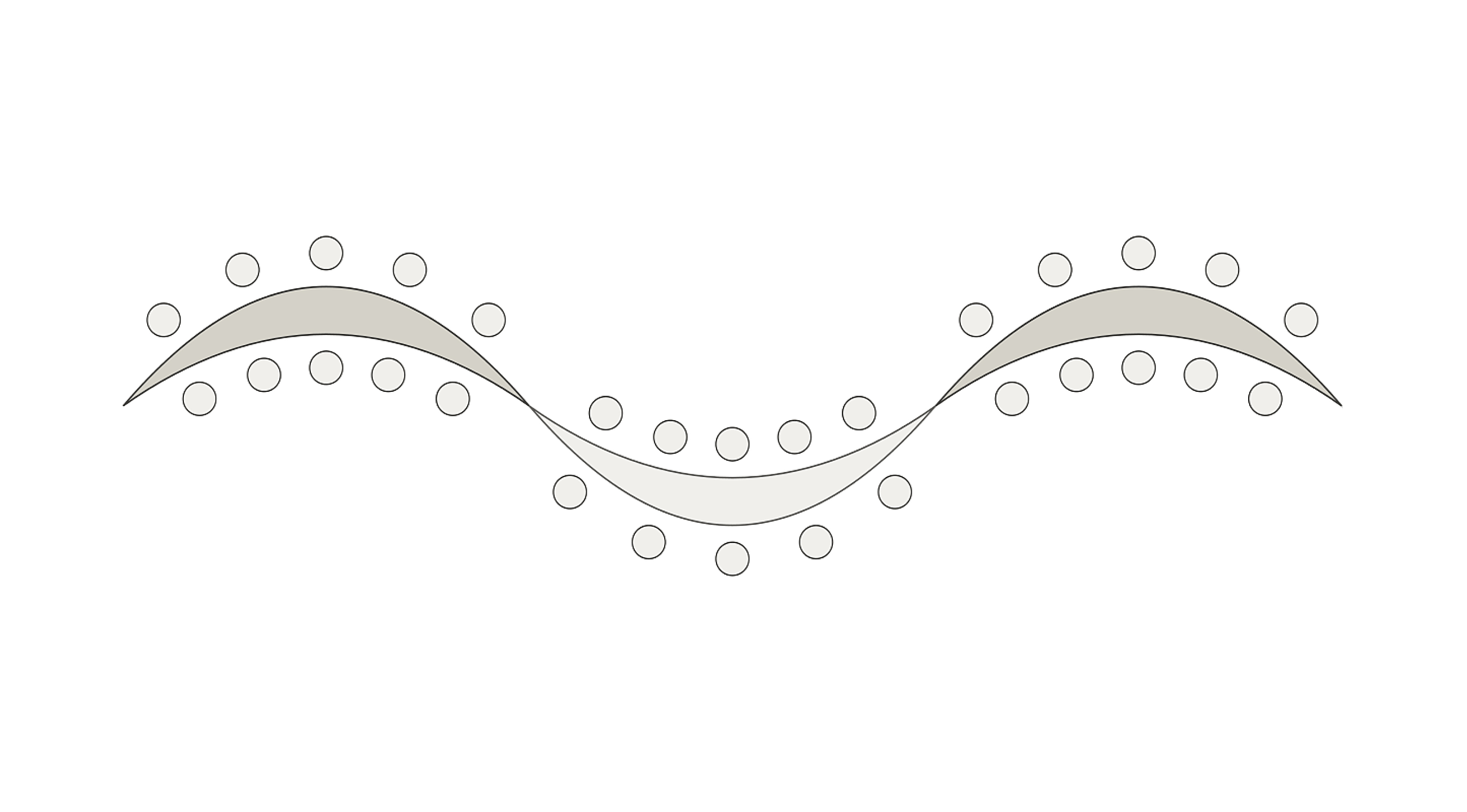
Serpentine tables use crescent-shaped tables linked together in an alternating wave pattern, with guests seated along both the inner and outer curves. This elegant arrangement encourages conversation across the table.
2. Serpentine tables
The serpentine table configuration is a connection of crescent-shaped tables or curved tables placed side by side in an alternating manner, creating a winding pattern through the space. The setup is elegant and sophisticated, making it ideal for upscale events that require an unusual but luxurious layout.
Serpentine table layouts impress whether you add minimalist table decorations or extravagant table settings and décor. The entire table length can be short or long, but longer layouts make the most impact.
Keep in mind that while the serpentine layout encourages conversation amongst guests sitting opposite one another, engaging with guests down the table’s curve can be challenging. It also requires a bit more floor space than straight banquet tables or long rectangular tables.
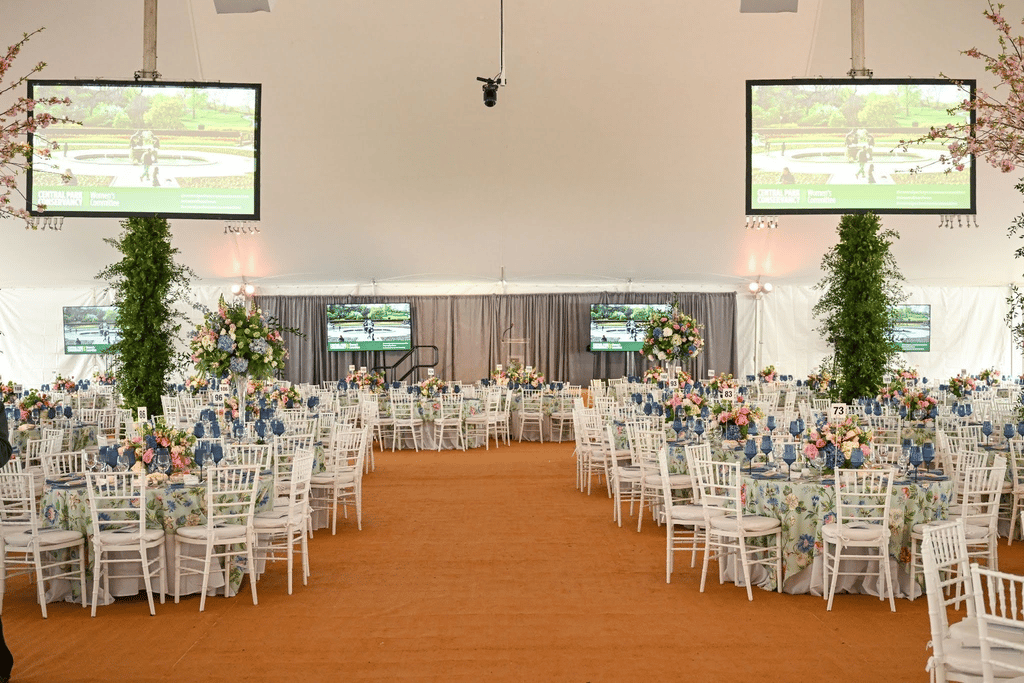
A variation of the X-shaped layout using round tables. Central Park Conservancy’s 44th Annual Frederick Law Olmsted Awards Luncheon at the Conservatory Garden in Central Park, New York City. Photo by Madison Voelkel / BFA.com ⓒ BFA
3. X and O-shaped seating
Table designs in alphabetical configurations, like X’s and O’s, can work for nearly every type of event. For corporate dinners or charity fundraisers, X and O-shaped layouts feel much more creative than traditional banquet set-ups.
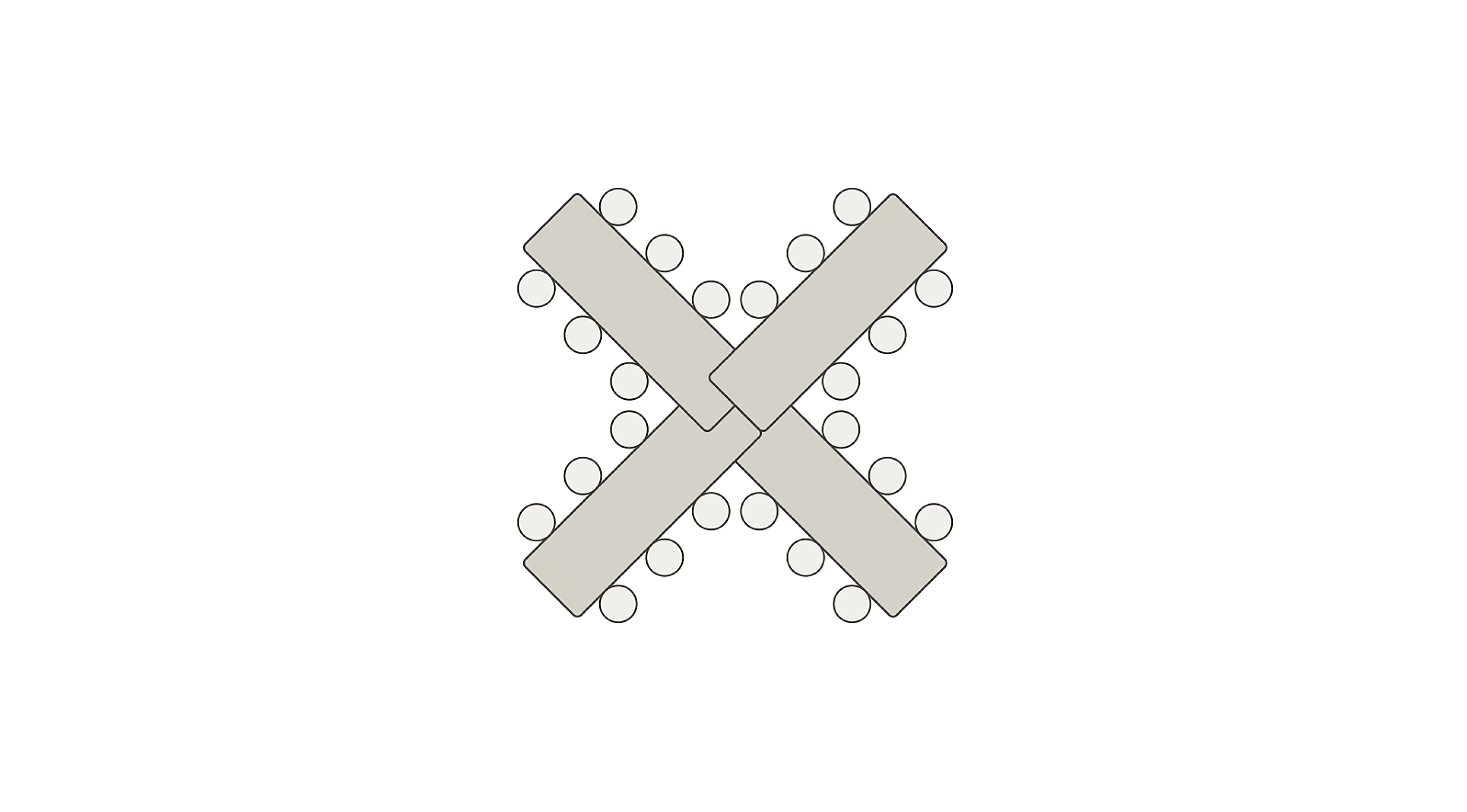
An X-shaped layout connects four rectangular tables at a central point, seating guests along each arm of the configuration. As a result, conversations stay intimate within each section while maintaining a sense of togetherness for the whole group.
X-shaped layouts consist of four rectangular tables that connect at a central point, allowing guests to have conversations in small clusters yet still feel part of the group. O-shaped arrangements allow for equal sightlines and create a large open space in the center, which can be used for performers, entertainers, or presenters.
Related: How to plan a corporate dinner that impresses
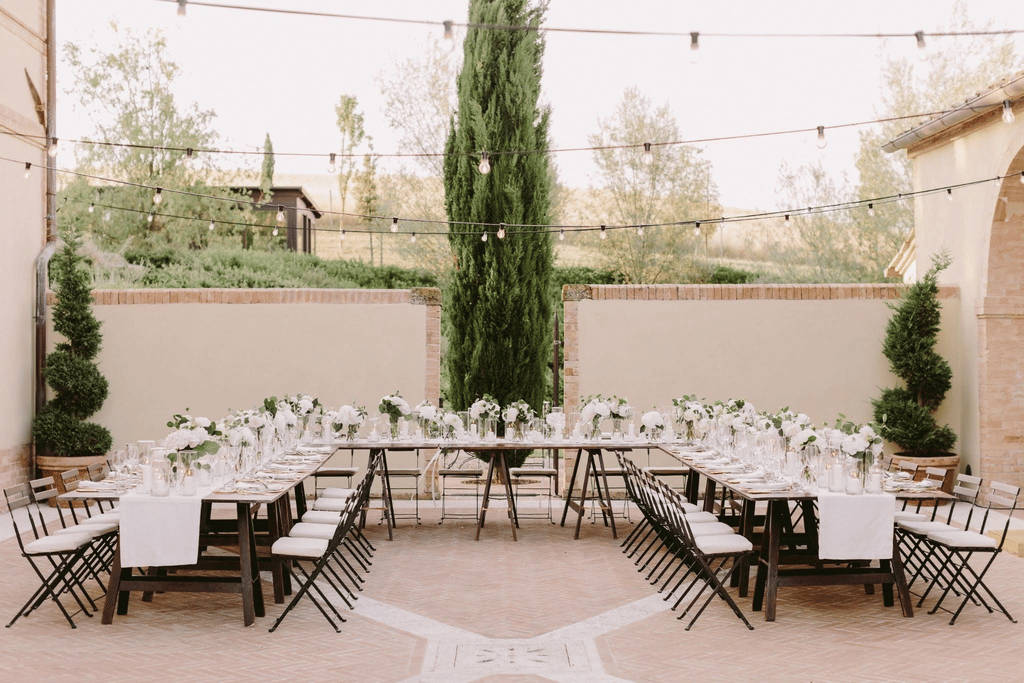
An example of a U-shaped table layout for an intimate setting. Source: Envato.com.
Layouts for guest interaction
For events centered around speeches, presentations, networking, or performances, your table layout will directly impact how well guests can view and participate in the event. U-shaped, V-shaped, and oversized table layouts ensure that every guest can see clearly, hear clearly, and feel connected to the focal point of the event.
An example of a U-shaped table layout at the CCF 33rd Annual Women of Distinction Luncheon, at Waldorf Astoria, New York City. Photo by Julia D’Ambola / BFA.com ⓒ BFA
4. U-shaped
A standard set-up for corporate meetings and workshops, U-shapes work well for corporate dinners, award ceremonies, and panel discussions where all guests need direct sightlines to speakers or presenters. The open end of the U can easily accommodate a head table, podium, screen, or entertainment stage, and presenters can use the open center of the U to engage with guests, encourage audience participation, or facilitate Q&A sessions.
Best-suited for venues with a clear focal wall or stage, U-shapes can be created with long rectangular tables or by connecting multiple round tables in a U formation. Shallow U-shapes work better for smaller groups of 30-50 guests. Deeper U-shapes can accommodate larger audiences and maintain sightlines but are typically not an efficient use of space.
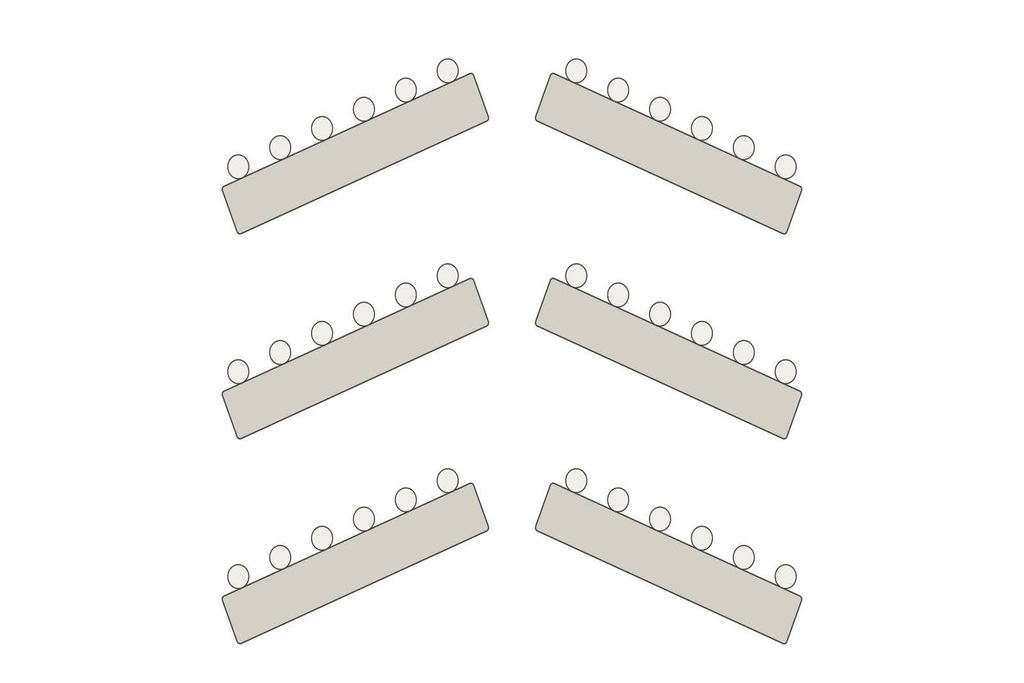
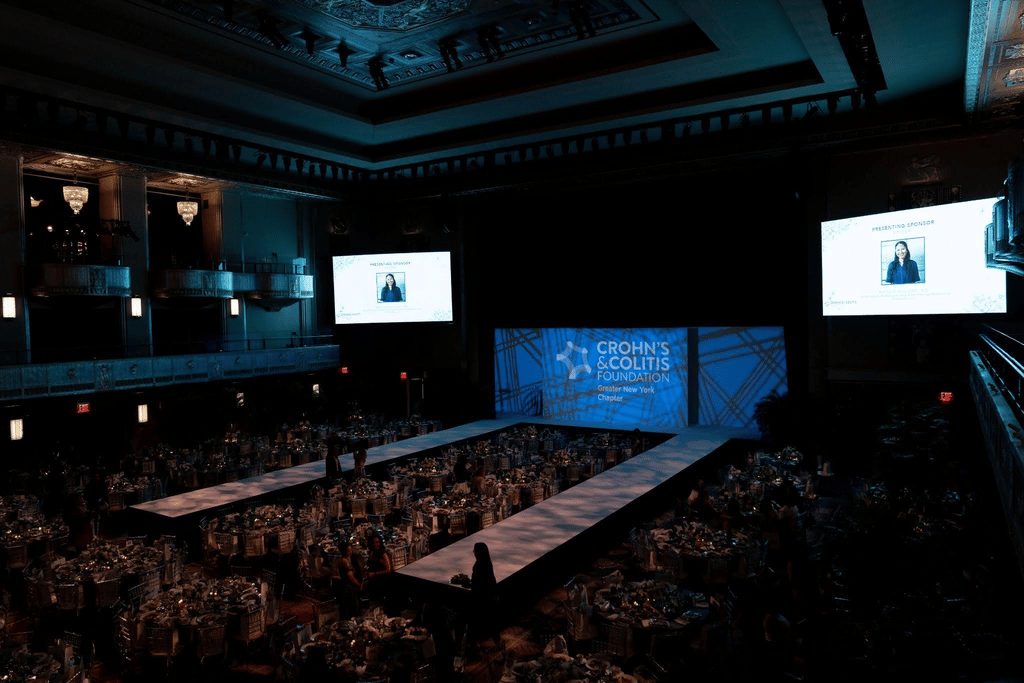
A chevron layout angles rectangular tables in mirrored rows that converge toward a central focal point, so that all guests have a natural sightline to the stage, runway, or presentation area at the front of the room.
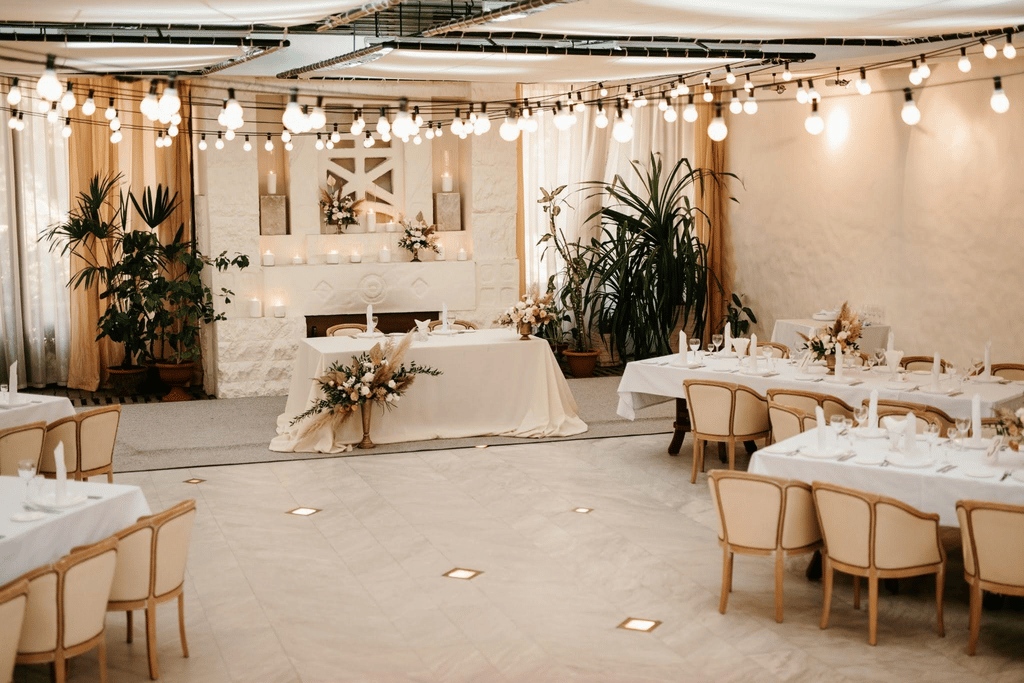
An example of a chevron table layout. Source: Envato.com.
5. V-shaped or chevron layouts
With a V-shaped or chevron layout, tables are arranged in angled rows that converge toward a focal point. All guests have angled sightlines that naturally direct attention toward the focal point, making it an ideal layout for events with linear presentation formats, such as model walks, product demonstrations, and processions.
Best suited for venues with a central aisle, catwalk, or stage that extends into the audience space, the chevron layout can be created with long rectangular tables angled inward or with round tables positioned along diagonal lines. The point of the V can face toward or away from the focal point, depending on your venue layout and presentation style.
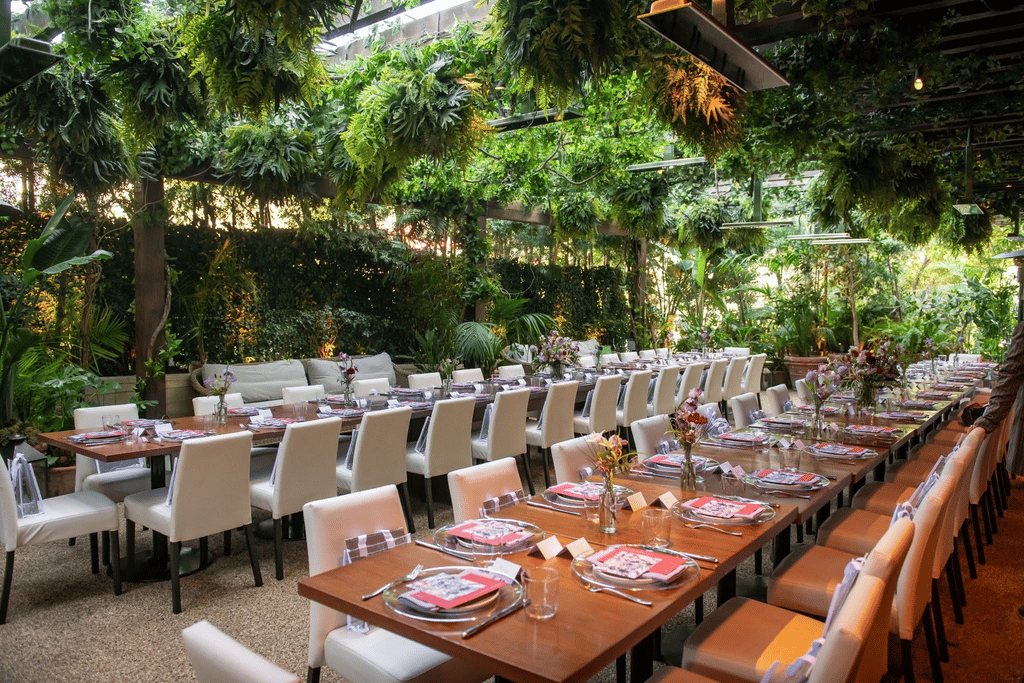
An example of an oversized table layout at the Cultivist LA Art Week Breakfast with Lauren Quin at Ardor, West Hollywood, CA. Photo by Steve Lucero / BFA.com ⓒ BFA
6. Oversized tables
One of the biggest modern trends in event seating, oversized tables make an impressive statement. Consider creating a series of rectangular banquet tables to create an extra-long family-style table that seats 50 people or more. Or you can connect long rectangular dining tables with shorter rectangular tables to create a squared-off U-shaped layout that stretches the entire length of the venue.
One extra-long table creates a bold visual statement, but you can also position two or more long tables side by side or intentionally place them at angles to fit an awkwardly shaped room or a venue with columns.
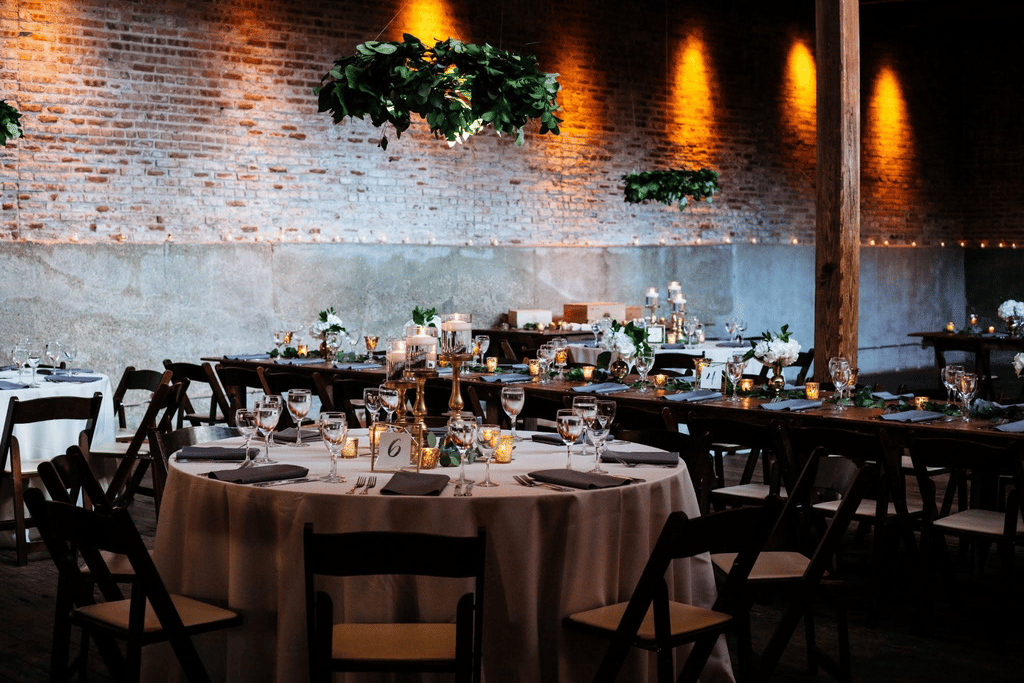
An example of a mixed table layout using both round and rectangle tables. Source: Envato.com.
Layouts for venue flexibility
Not every venue is a perfect rectangle, and not every guest list breaks down into neat groups of 10. Mixed table layouts give you flexibility to work with unusual spaces, accommodate varying party sizes, and add visual interest to make an event feel thoughtfully curated.
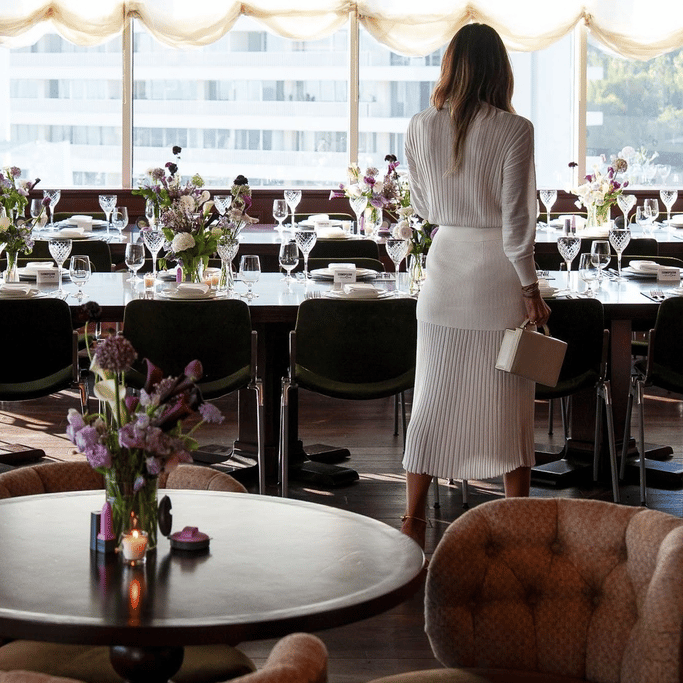
An example of a mixed table layout at the Cosmopolitan x plusOne LA Dinner at Soho House, West Hollywood, CA. Photo by Victor Arriola / BFA.com ⓒ BFA
7. Mixed table shapes and sizes
Grouping round tables with square tables or round tables with long rectangular tables can make for an interesting and unexpected layout. You can get even more creative by featuring different tablescapes, linens, napkins, table runners, centerpieces, or decorative elements on different table shapes. Just be sure to exercise some restraint to maintain a cohesive look.
Mixed table layouts allow for various configurations:
- Long rectangular tables in the center of the room with round tables surrounding on either side
- Round tables in the center of the room with long tables set up on either side of the space
- Rectangular tables throughout the room, with round tables at the front
Another way to create visual interest in an event space is to mix different table sizes in the same shape. For example, consider mixing long tables with shorter rectangular tables or combining large round tables that seat 10-12 with smaller round tables that seat 6-8.
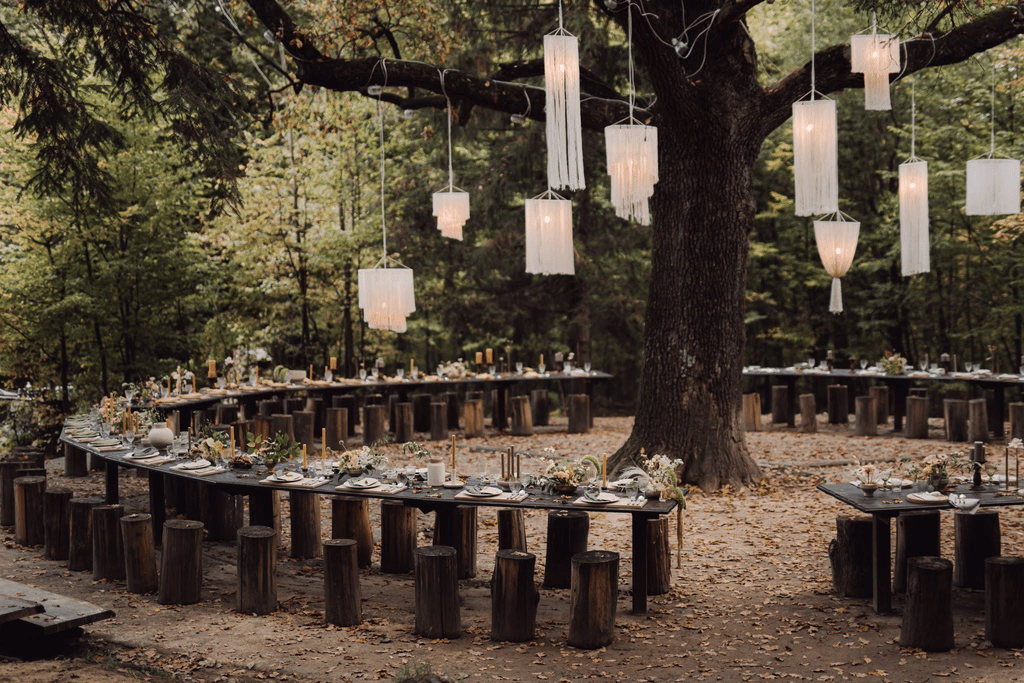
An example of a curved table layout. Source: Envato.com.
8. Curved seating
Curved tables are instantly eye-catching for their unconventional shape, and they can be combined to create even more elevated geometric layouts. To create a curved seating configuration, face two curved tables toward one another to create a larger circle. You can leave the empty space between or add a single round table to create an even more interesting shape.
As with all table layouts, make sure you space your tables properly so that it’s easy for guests to move about the room, mingle, and access the dance floor, bar, and restroom.
FAQs
What are the 5 basic types of table setup?
The most common table setups are rounds, rectangles, classroom, theater, and banquet.
- Rounds seat guests around a circular table for easy conversation.
- Rectangles work best for family-style or banquet dining.
- Classroom arranges rectangular tables in rows facing a focal point.
- Theater uses chairs only, no tables.
- Banquet lines up long tables end to end for large groups.
How much space do you need between tables at an event?
Allow 3 to 4 feet (1 to 1.2 meters) between tables so guests can move comfortably. For wheelchair-accessible events, increase spacing to a minimum of 5 feet (1.5 meters) to allow for turns.
Which is the best table layout for an event with a dance floor?
The best table layout for events with a dance floor is perimeter seating or any open-center design that keeps the middle of the room clear. Arranging tables along the walls maximizes the dance floor space while ensuring guests have easy access to both their seats and the floor.
Can you mix different table shapes at an event?
Yes. Mixing different table shapes (such as rounds with rectangles, or squares with long banquet tables) adds visual interest. It also gives event planners flexibility to work with unusual venue layouts or varying group sizes.
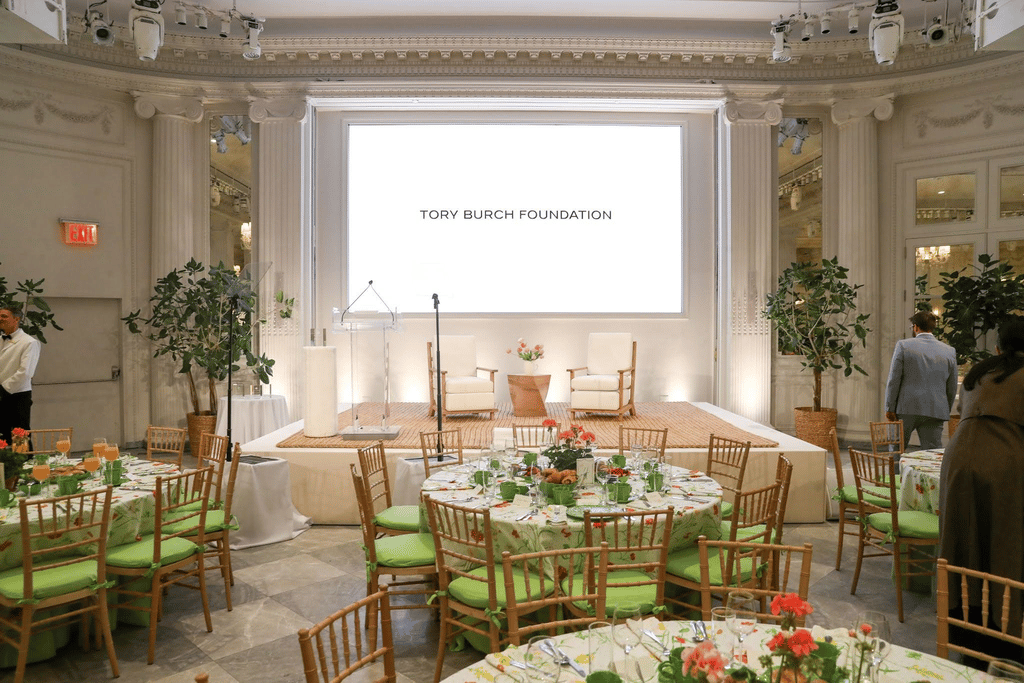
Tory Burch Foundation Honors Anna Wintour at 2026 Founders Breakfast at The Pierre, New York City. Photo by Neil Rasmus / BFA.com ⓒ BFA
What are the best table layout ideas for small venues?
The best table layouts for small venues are curved tables, mixed table sizes, and compact U-shapes. Curved tables fit awkward corners, mixed sizes let you accommodate varying group sizes without wasting space, and compact U-shapes maximize sightlines without requiring a large footprint.
Mixed sizes and shapes. Serpentine layouts that snake through a room. Geometric designs that delight when viewed from overhead. No matter which table layout feels right for your event, it won’t just impact your seating design — it will also create the unforgettable experience your guests deserve.
Header image: The PR Net London Breakfast at Bread Street Kitchen, London. Photo by Jack Hall / BFA.com ⓒ BFA